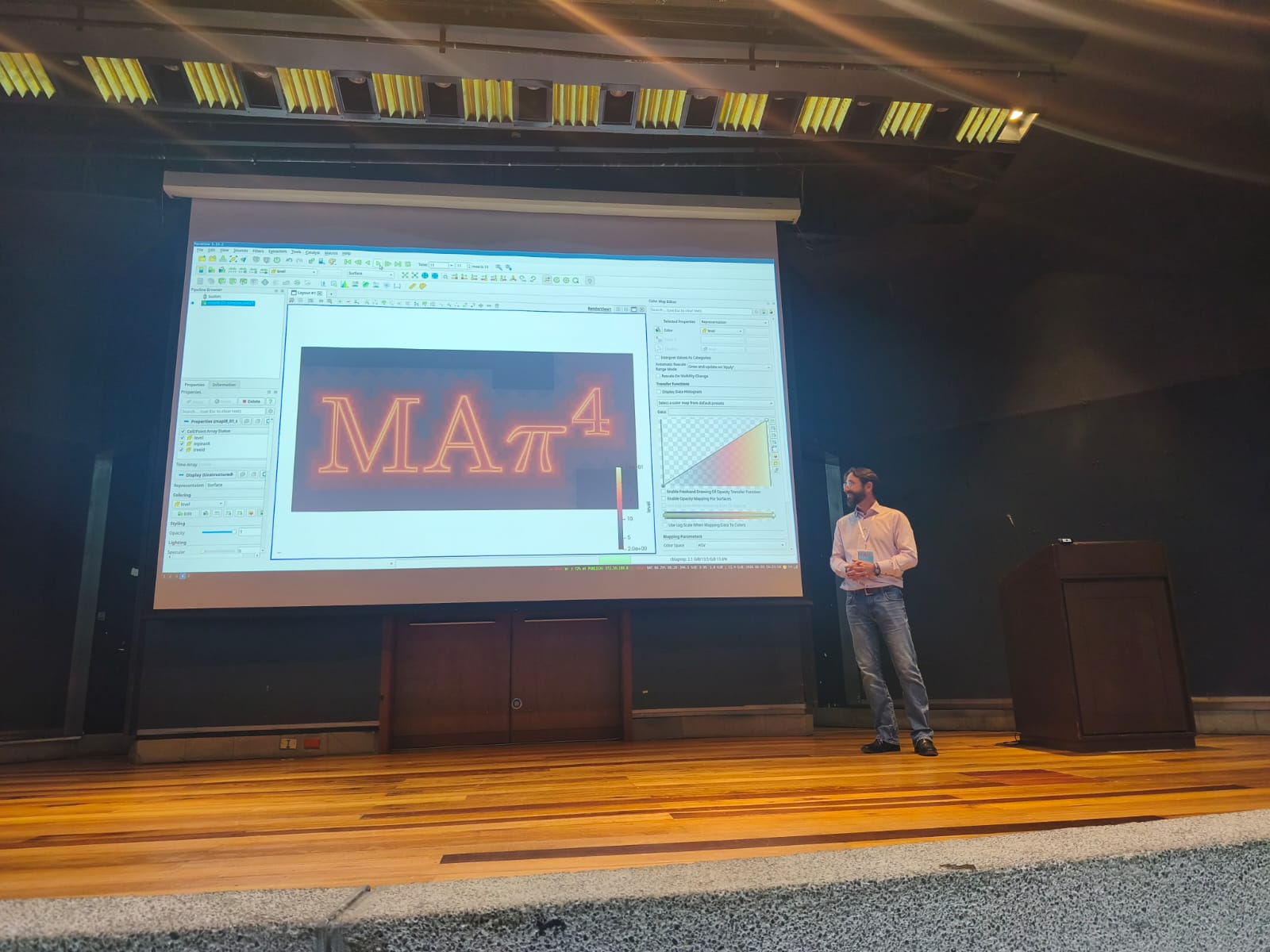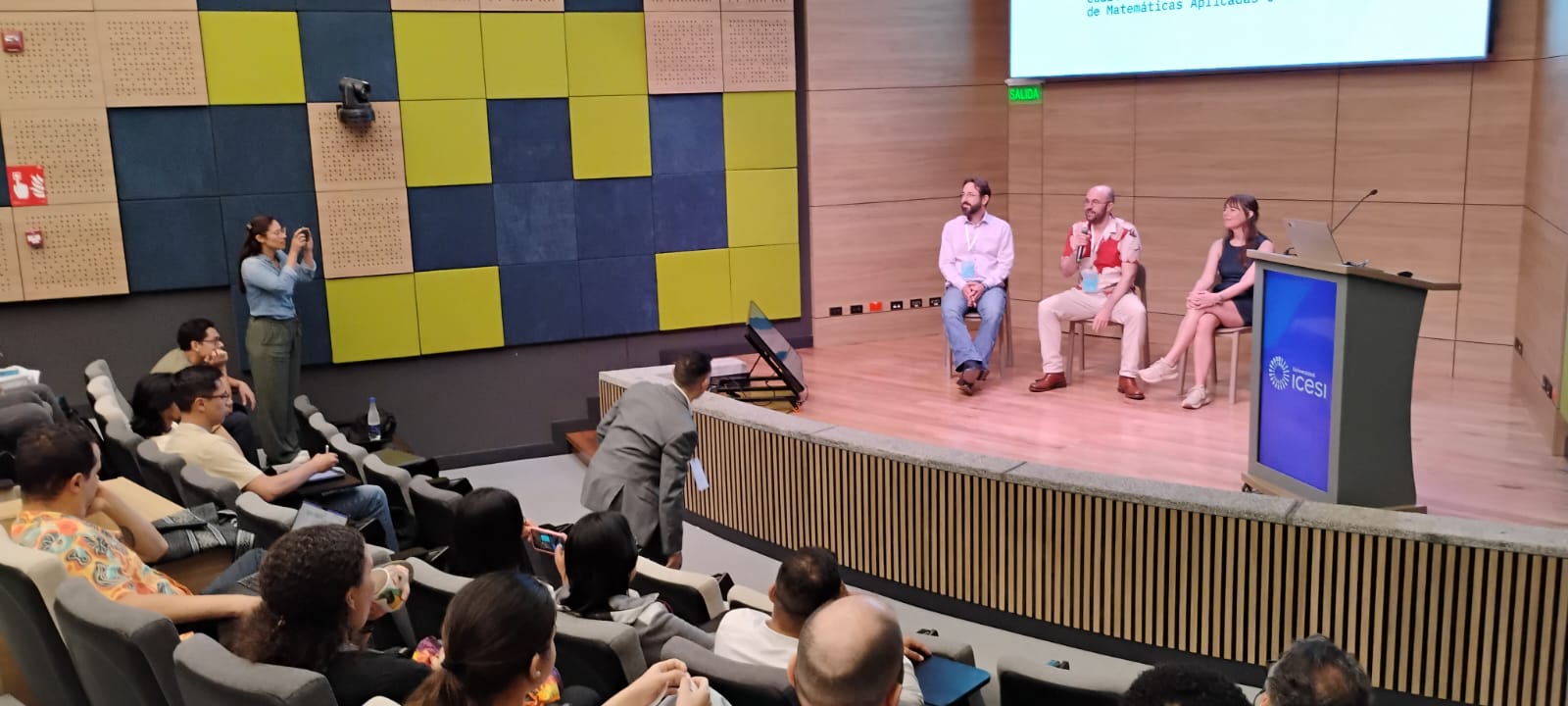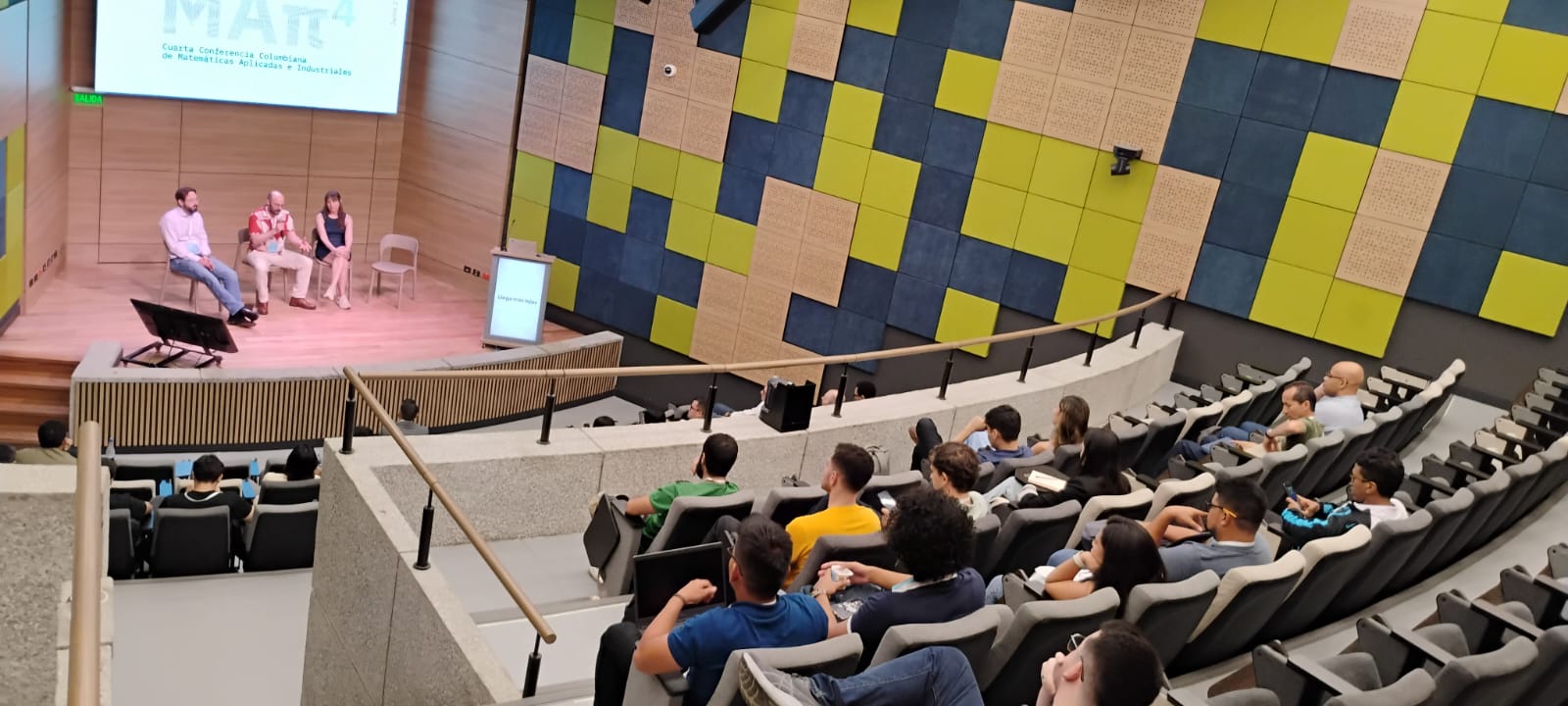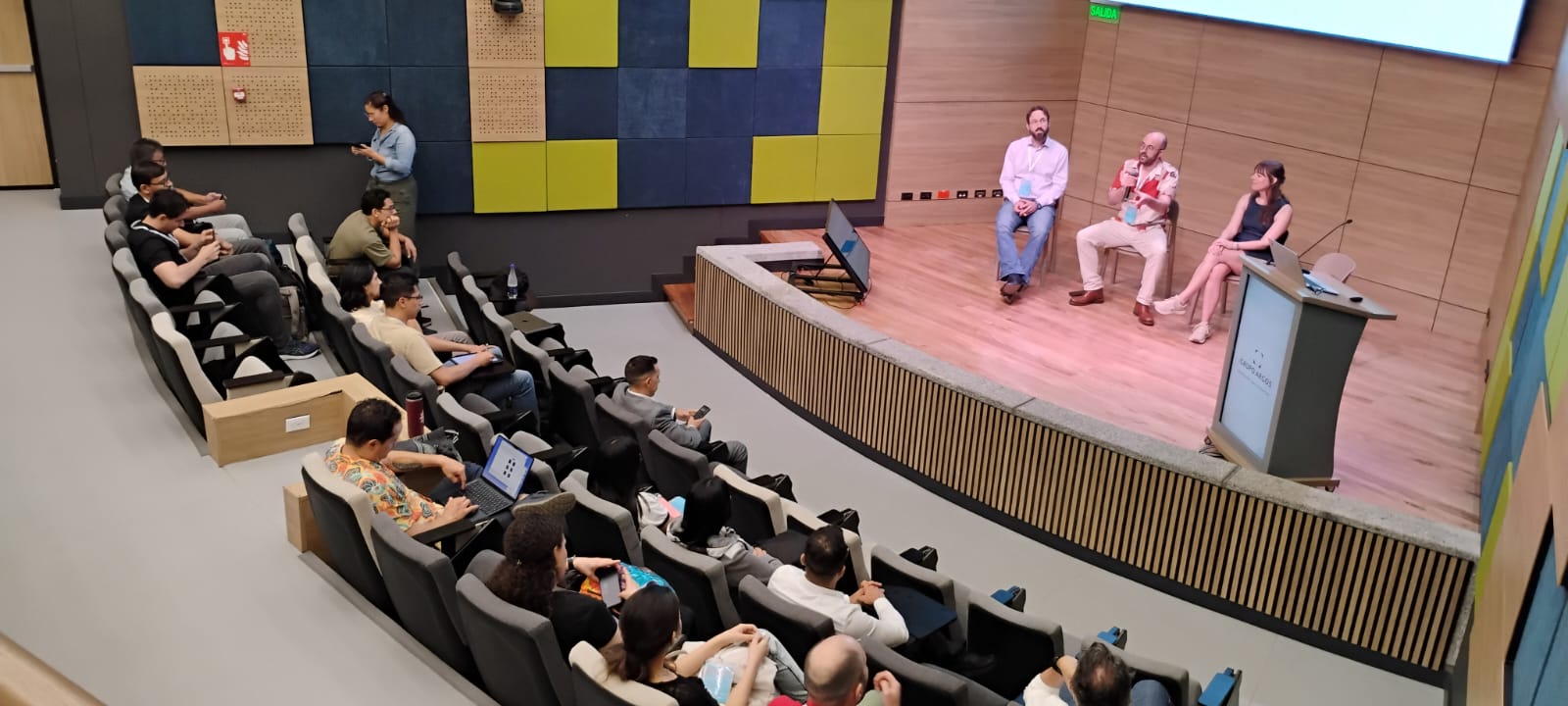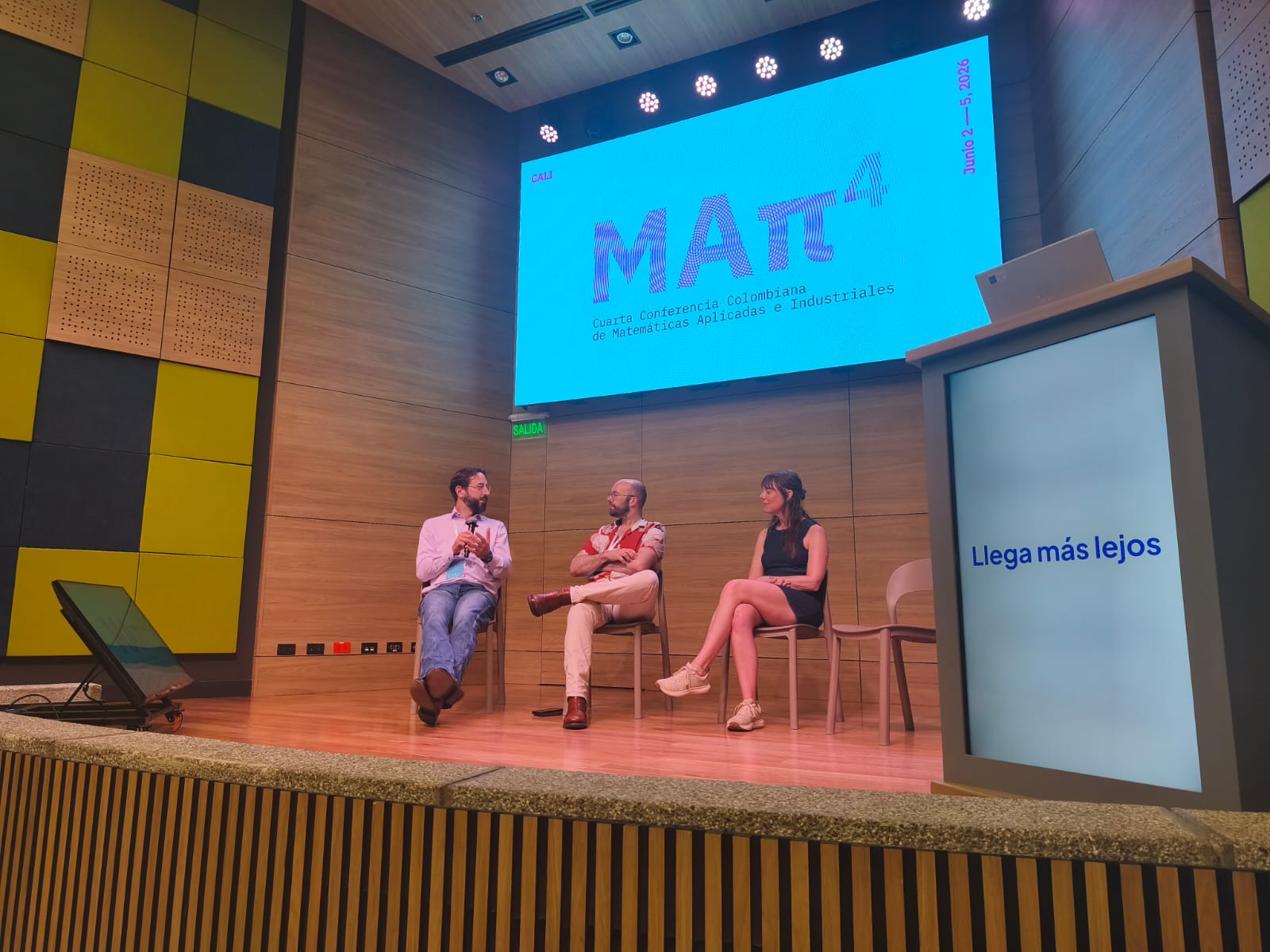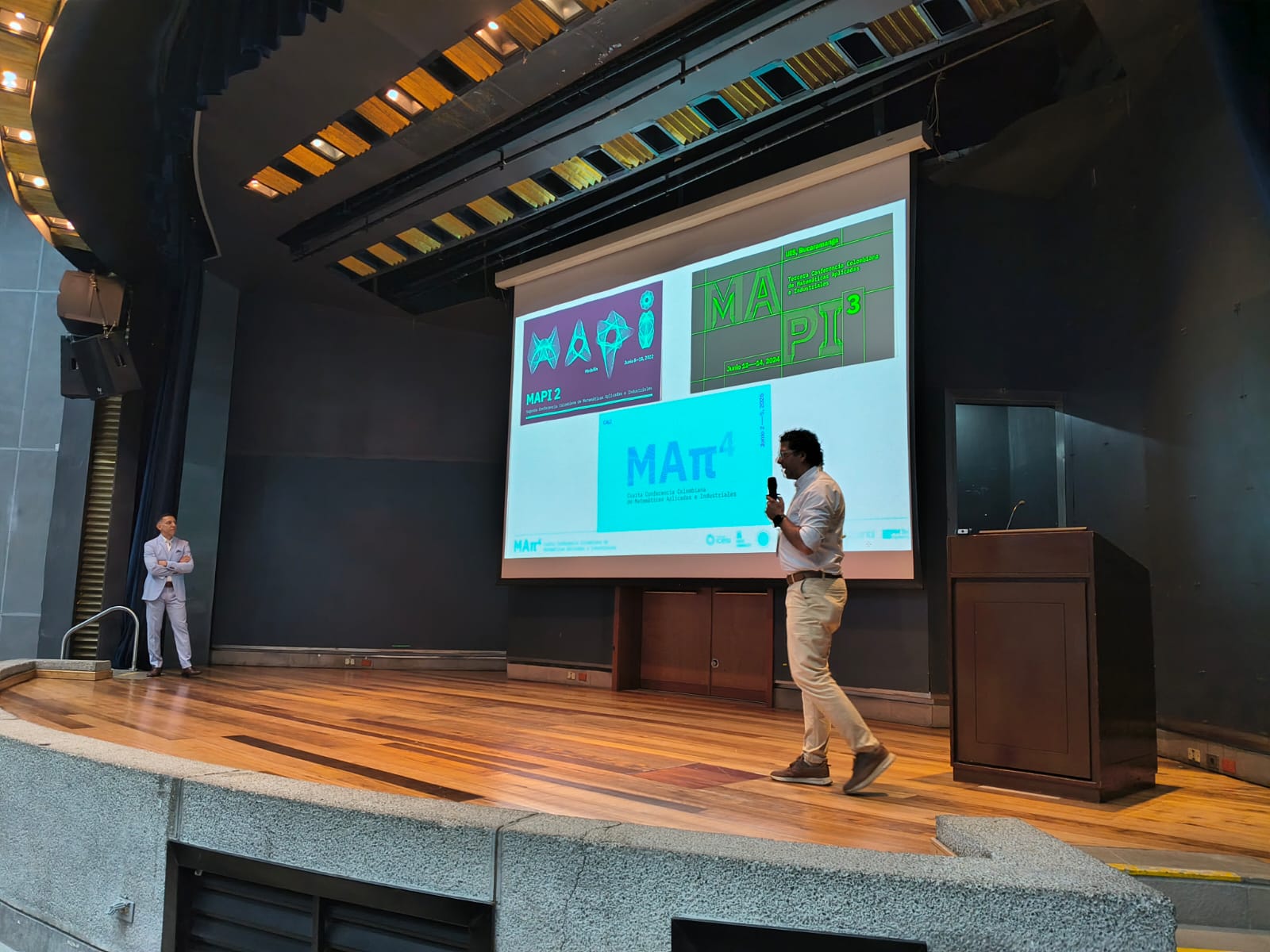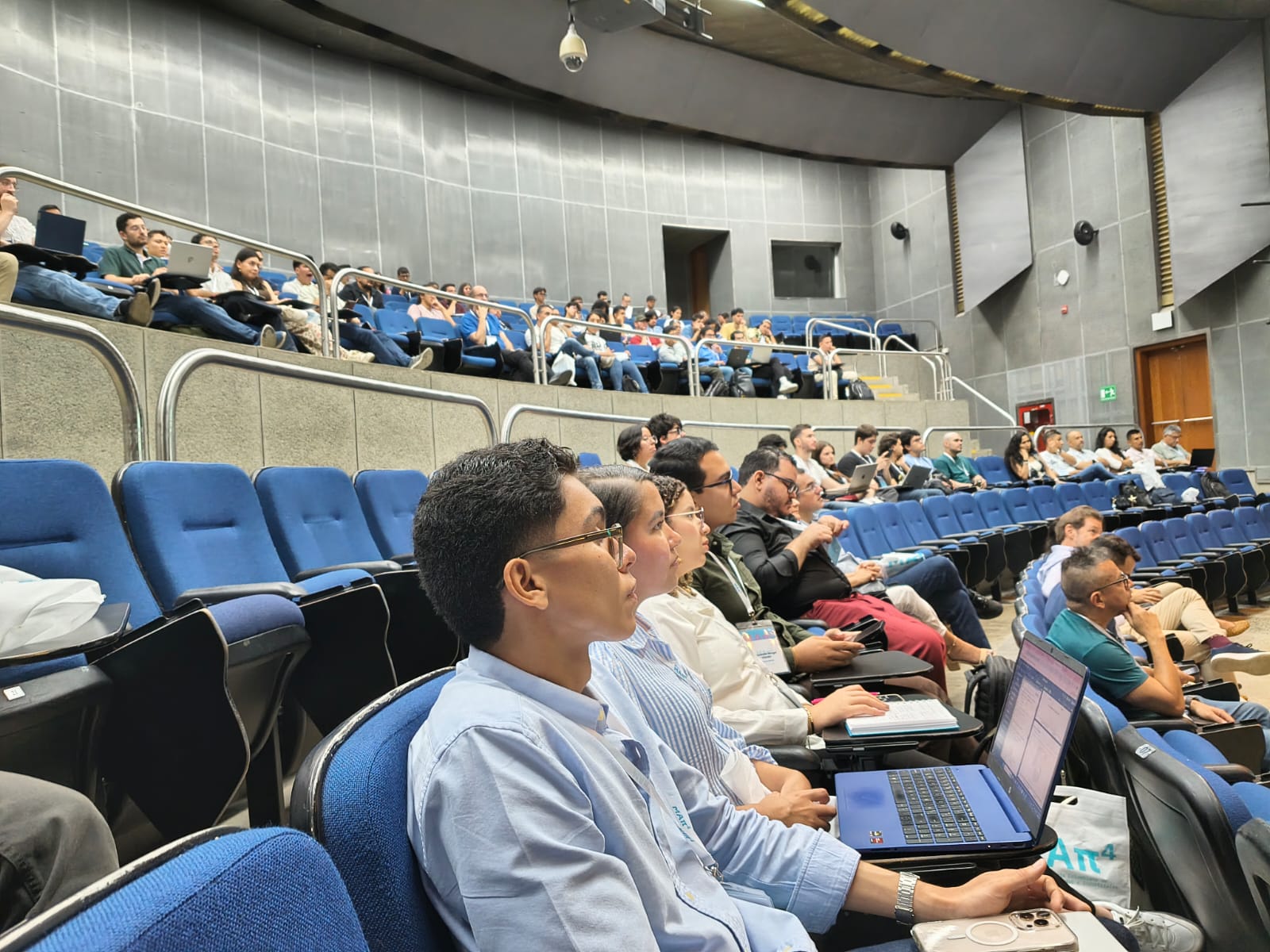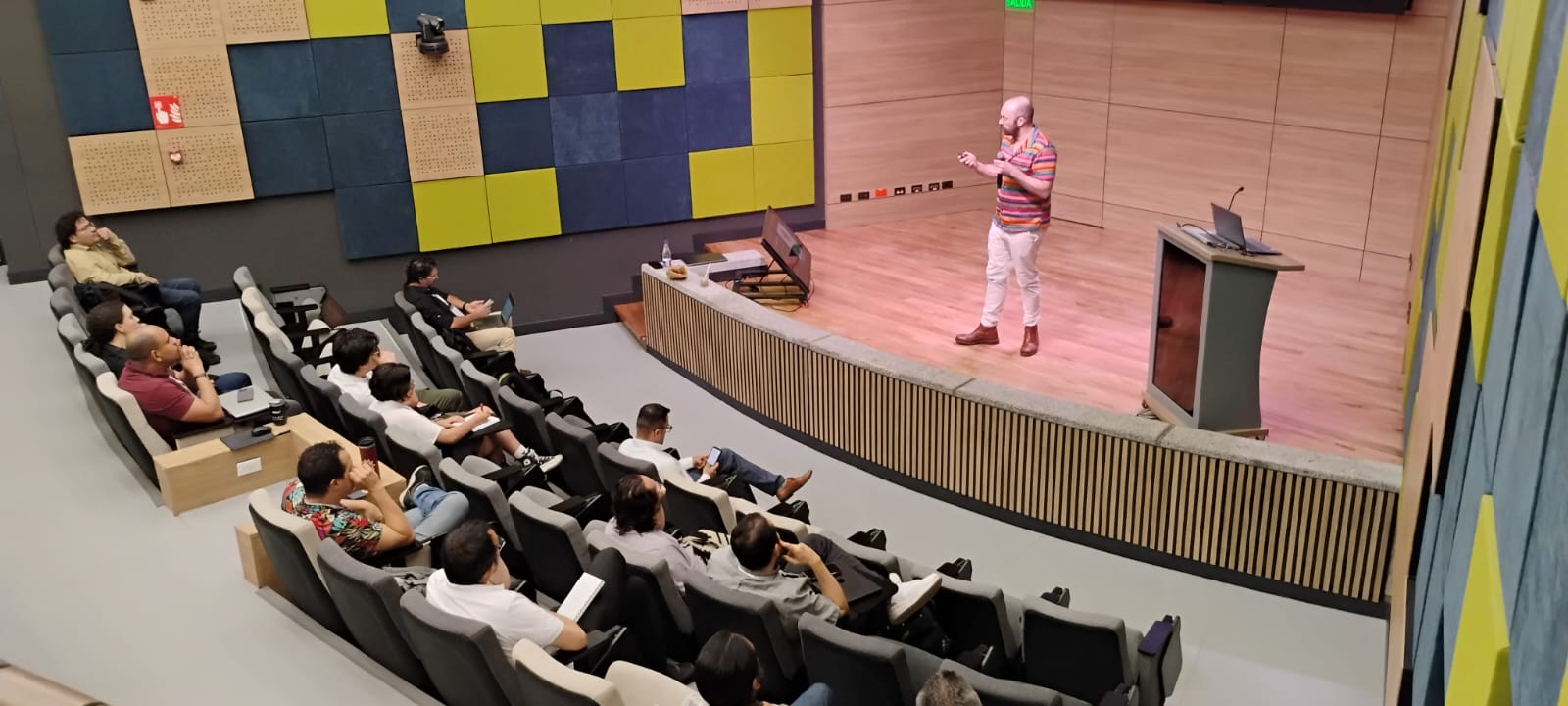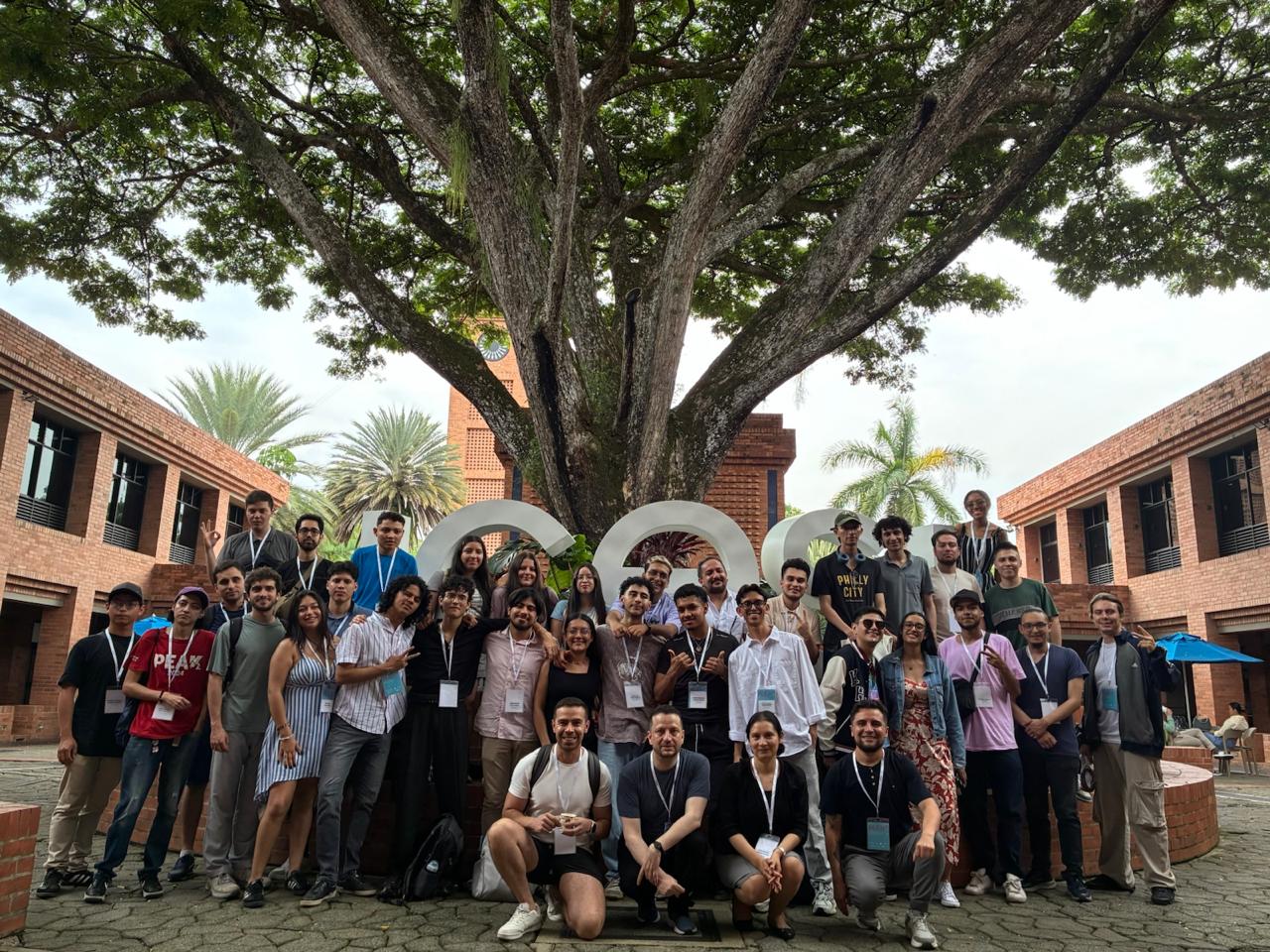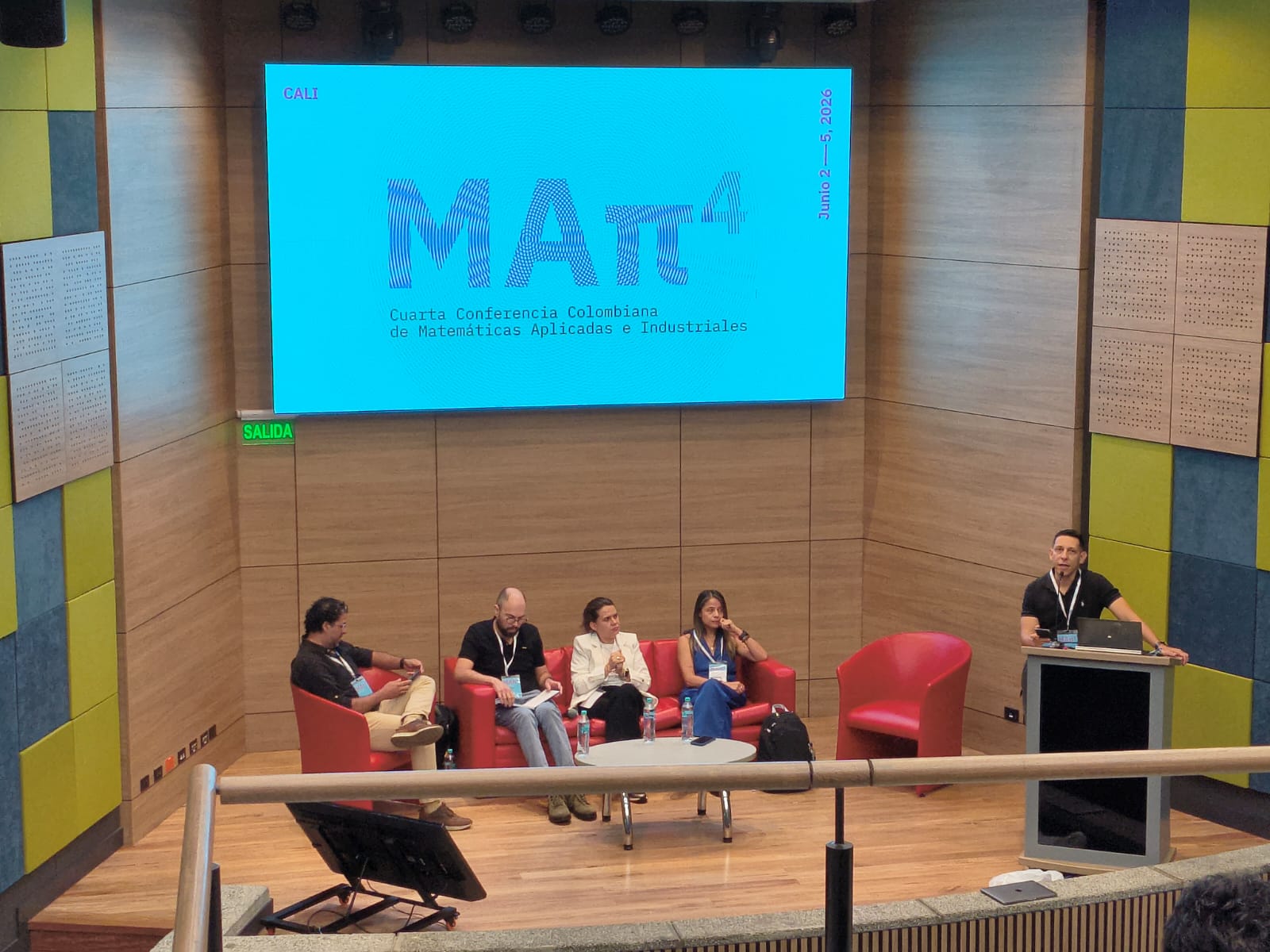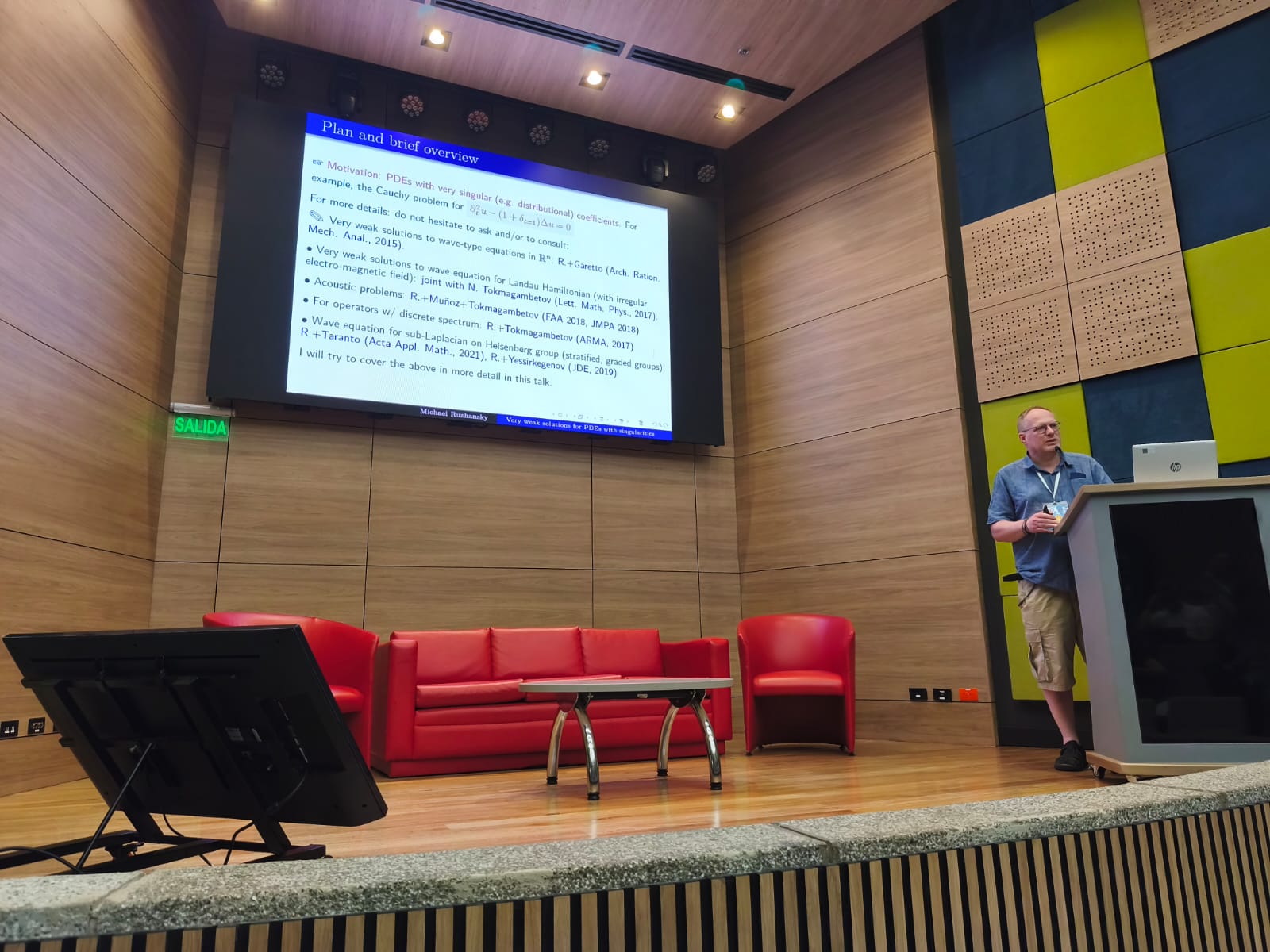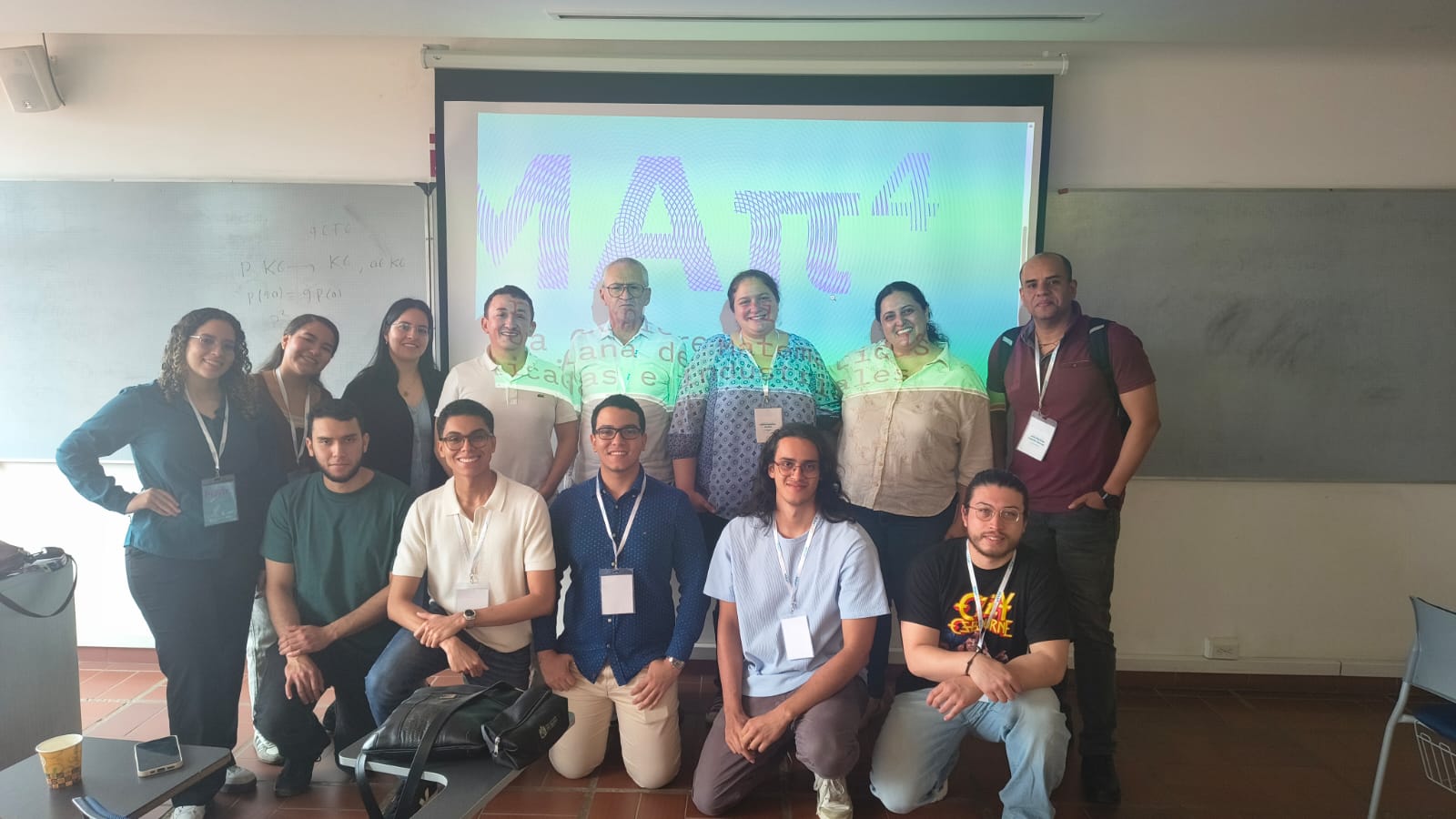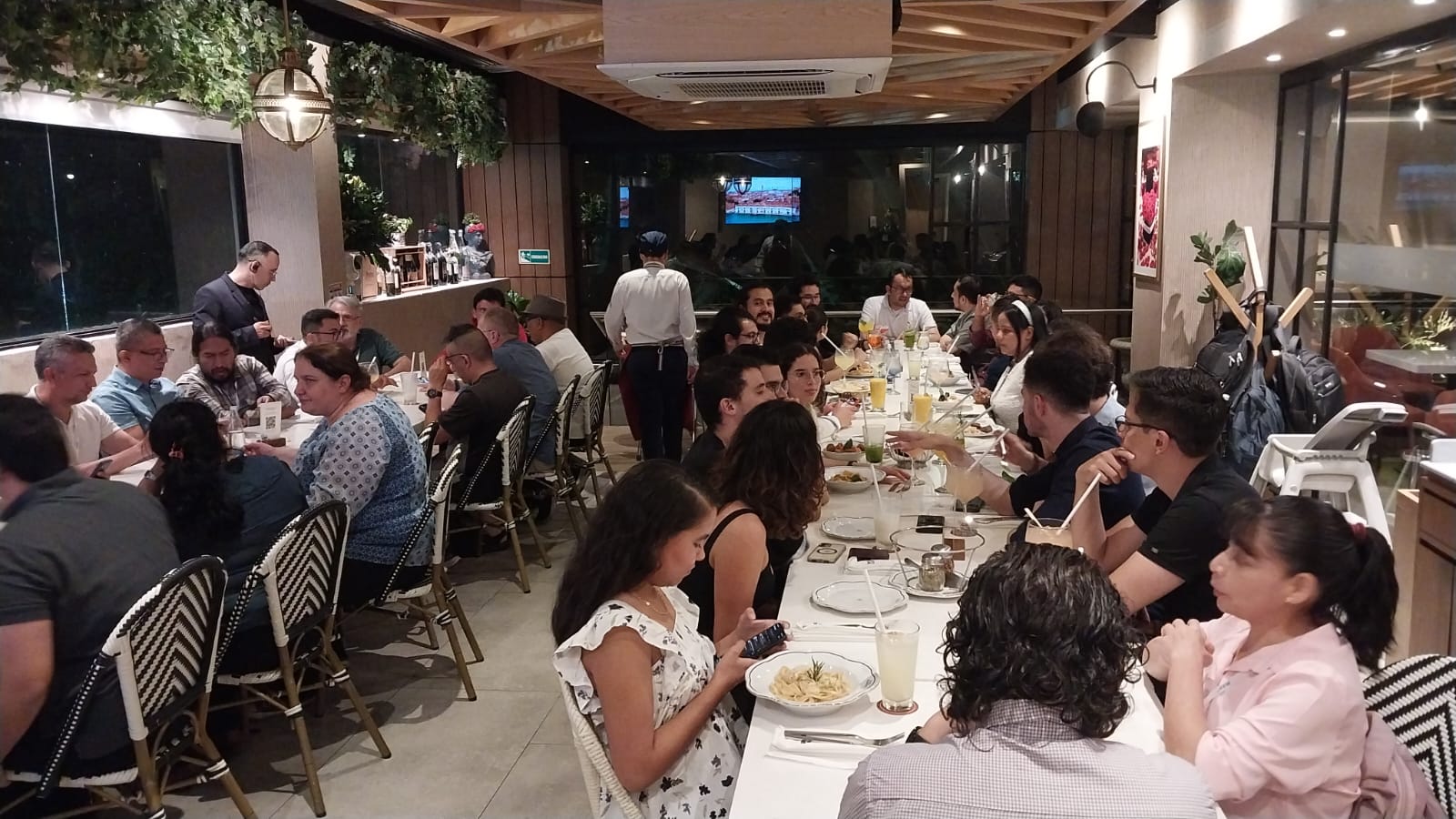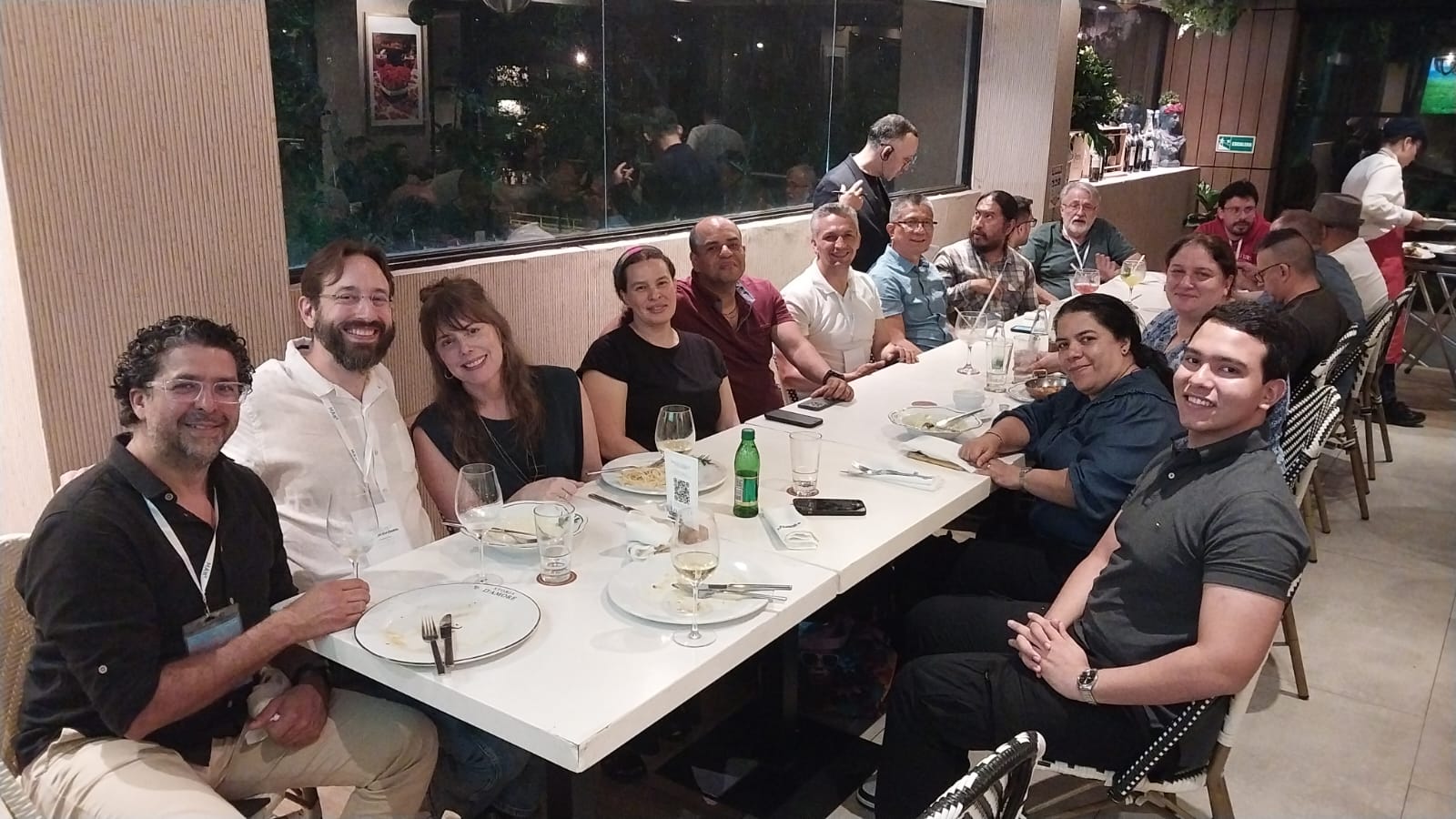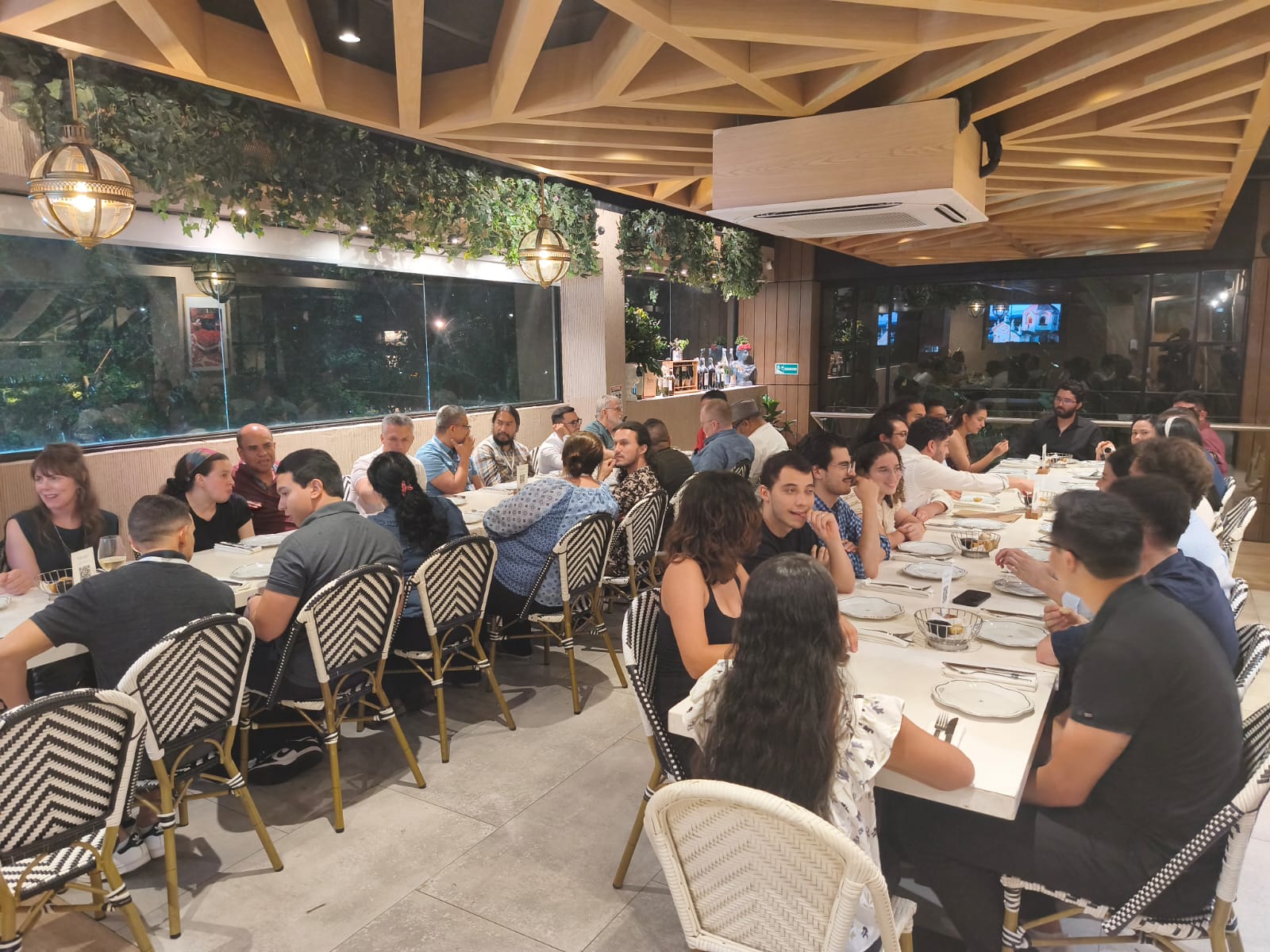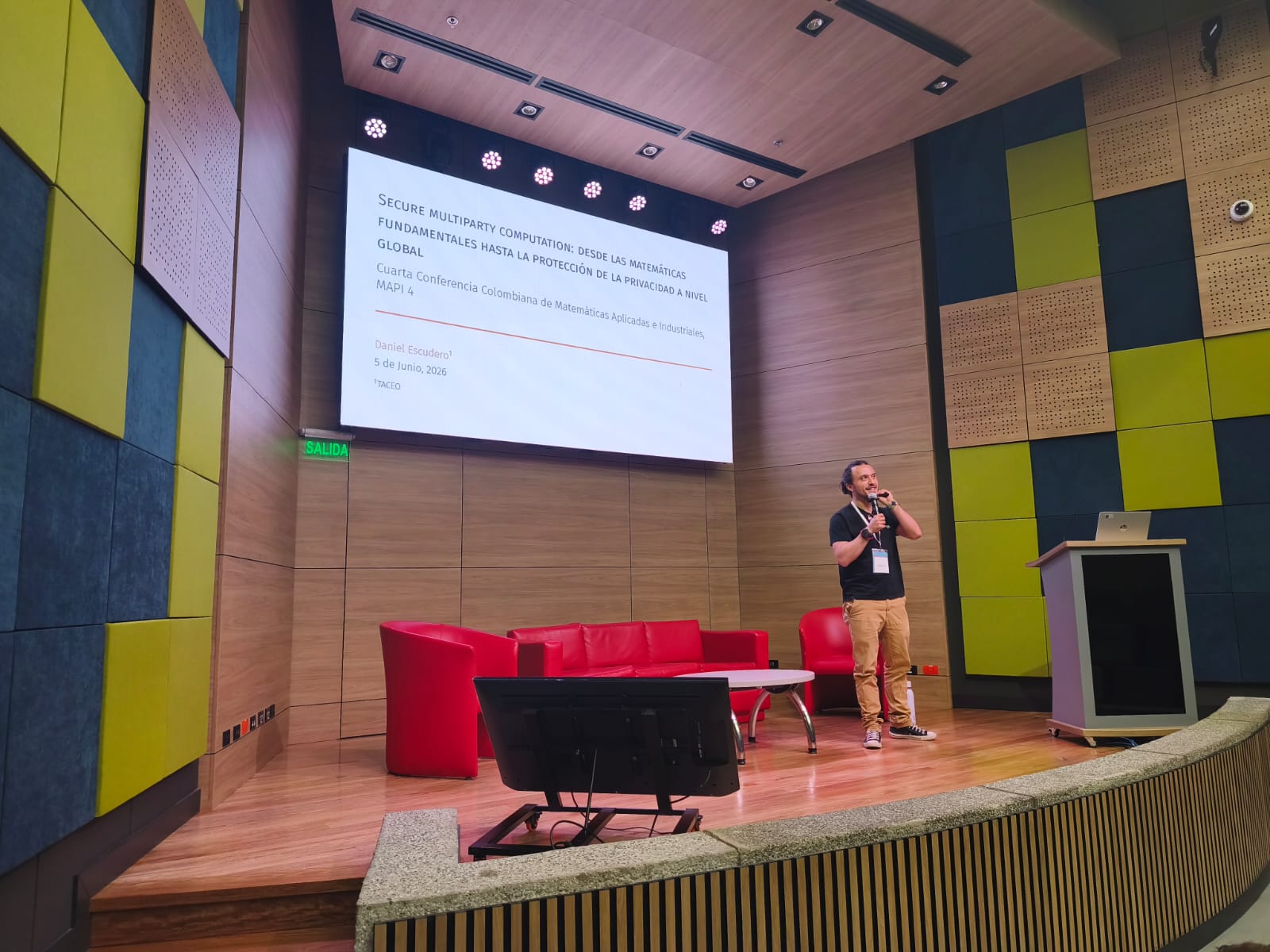






La Cuarta Conferencia Colombiana de Matemáticas Aplicadas e Industriales (MAPI 4) es un evento académico organizado por la Comisión de Matemáticas Aplicadas e Industriales de la Sociedad Colombiana de Matemáticas (SCM), en colaboración con instituciones académicas nacionales, que reúne a investigadores, profesionales y estudiantes interesados en las matemáticas aplicadas, la analítica de datos, la inteligencia artificial y sus aplicaciones en problemas científicos e industriales. En esta cuarta edición, el evento se llevará a cabo del 2 al 5 de junio de 2026 en la Universidad Icesi, en la ciudad de Cali, Colombia, y contará con la participación de conferencistas invitados, sesiones temáticas especializadas, charlas contribuidas, propuestas de sesiones especiales y procesos de publicación académica de los trabajos aceptados en una serie indexada de Springer, fomentando el intercambio de ideas, la difusión de resultados recientes y el fortalecimiento de redes de colaboración académica e industrial.
Áreas Temáticas
Invitamos contribuciones en todas las áreas de matemáticas aplicadas, incluyendo pero no limitándose a los siguientes campos de investigación:
&
Ecuaciones Diferenciales Parciales (EDP)
&
Matemática Aplicada
&
Teoría de Códigos y Criptografía
&
Matemáticas Industriales
Comité Organizador





Comité Científico
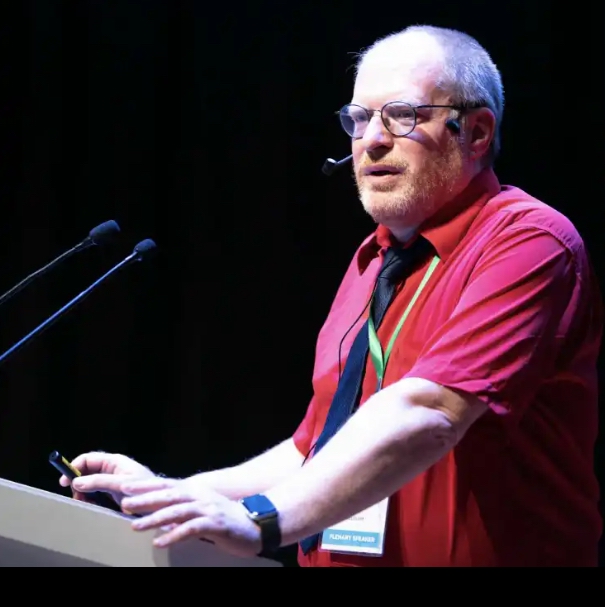
Plenaristas
Conferencistas invitados a MAPI 4




Envío de trabajos
La comunidad matemática y científica está cordialmente invitada a participar en la Cuarta Conferencia Colombiana de Matemáticas Aplicadas e Industriales (MAPI4), que se llevará a cabo del 2 al 5 de junio de 2026 en la Universidad Icesi, Cali - Colombia.
Este evento representa una oportunidad única para compartir sus contribuciones en matemáticas aplicadas, analítica de datos e inteligencia artificial aplicada a problemas científicos y sociales relevantes.
Resúmenes Extendidos
Convocatoria de charlas contribuidas con resultados originales o recientes.
- Artículo corto de 3–6 páginas.
- Incluye introducción, resultados principales y referencias.
- Idioma: envío estrictamente en Inglés.
Prepare su manuscrito usando la plantilla oficial LaTeX y súbalo a la plataforma de Springer.
Descargar Plantilla LaTeX Enlace a SpringerSesiones Especiales
Si está interesado en proponer una sesión especial durante el evento, le invitamos a diligenciar el formulario de propuesta.
- Nombre de la sesión.
- Descripción y justificación.
- Posibles invitados.
Fechas Importantes
Debido a la gran solicitud recibida para extender el plazo, el Comité Organizador ha decidido ampliar la fecha límite para el envío de resúmenes extendidos.
Publicación en Springer Book Series

Los resúmenes extendidos que sean aceptados serán publicados en una edición especial de la Book series Research Perspectives – Trends in Mathematics (Electronic ISSN 2509-7415; Print ISSN 2509-7407), proporcionando visibilidad internacional a su investigación.
Ver serie de publicaciones SpringerProceso de Envío
Redacte su resumen extendido (3-6 páginas) en Inglés utilizando la plantilla LaTeX oficial.
Utilice la plataforma de Springer antes del 28 de febrero de 2026.
Ver guía de autores (PDF)Su trabajo será evaluado rigurosamente por el comité académico del evento.
Recibirá la confirmación de aceptación y los detalles para su presentación.
Su investigación aceptada será publicada en Springer con indexación internacional.
| Tipo de registro en MAPI 4 | Valor hasta 8 de mayo | Valor después del 8 de mayo | Pago |
|---|---|---|---|
| Estudiante + Subscripción Socio Adjunto | $320.000 | $384.000 | Realizar pago |
| Estudiante + Subscripción Socio Adjunto Virtual | $290.000 | $348.000 | Realizar pago |
| Estudiante NO miembros de la SCM | $220.000 | $264.000 | Realizar pago |
| Profesionales NO miembros de la SCM | $750.000 | $900.000 | Realizar pago |
| Socios Efectivos SCM (si ya eres socio activo) | $320.000 | $384.000 | Realizar pago |
| Profesional + Subscripción Socio Efectivo | $620.000 | $744.000 | Realizar pago |
| Profesional + Subscripción Socio Efectivo Virtual | $520.000 | $624.000 | Realizar pago |
Aclaraciones
-
La SCM tendrá este año dos modalidades de subscripción tanto para socios adjuntos
(estudiantes) como para socios efectivos (profesionales y profesores):
- Socio Adjunto Virtual o Socio Efectivo Virtual significa que harás parte de la SCM y todo el material que distribuye la SCM a sus socios será digital.
- Socio Adjunto o Socio Efectivo significa que harás parte de la SCM y todo el material que distribuye la SCM a sus socios será en papel.
- Si eres estudiante activo de pregrado o posgrado, tienes tres opciones para el registro, dos de ellas te permitirán ser Socio Adjunto de la SCM.
- Si eres profesional o profesor, tienes tres opciones para el registro, dos de ellas te permitirán ser Socio Efectivo de la SCM.
- El MAPI 4 es completamente presencial. No se tendrán sesiones híbridas ni completamente virtuales.
-
Si el pago se realiza en una entidad bancaria y no por los botones de PAYU, es importante enviar
el comprobante de pago al correo scm@scm.org.co
para que quede debidamente registrado en la conferencia.
Datos bancarios de la SCM:
SOCIEDAD COLOMBIANA DE MATEMÁTICAS
NIT 8600477951
Banco Davivienda
Cuenta de ahorros DAMAS No. 0550008600371564
El valor del registro incluye
- Almuerzos durante los 4 días del evento
- Refrigerio en los coffee-break mañana-tarde durante los 4 días del evento
- Welcome reception
- Ingreso a minicursos, panel industrial, etc.
- Souvenirs
| Hora | Room 501 E | Room 502 E | Room 503 E | Room 504 E | Room 505 E |
|---|---|---|---|---|---|
| 8:00 - 10:00 | Registration - Hall Auditorio Manuelita | ||||
| 10:00 - 11:30 | Welcome ceremony - Auditorio Manuelita | ||||
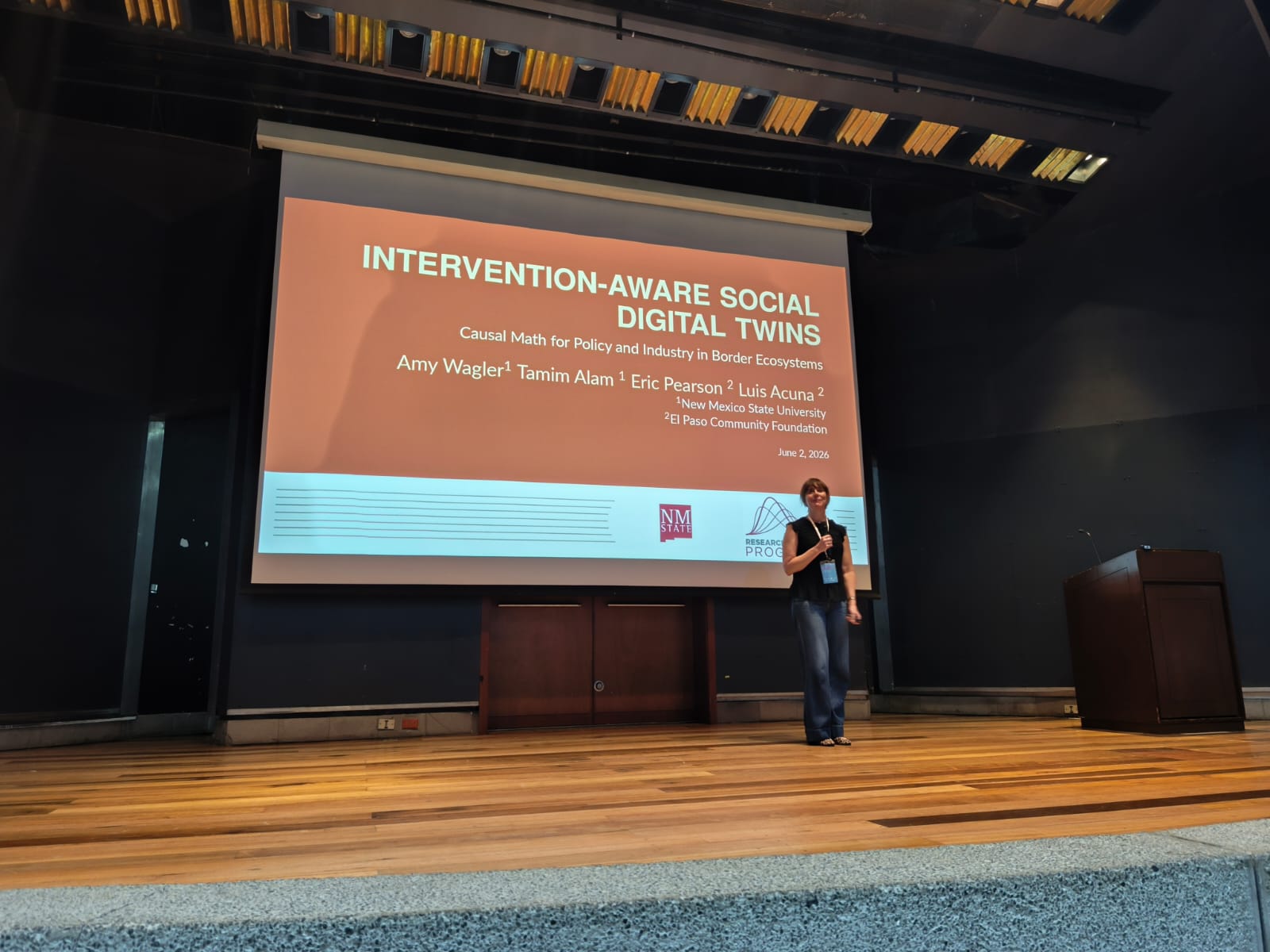
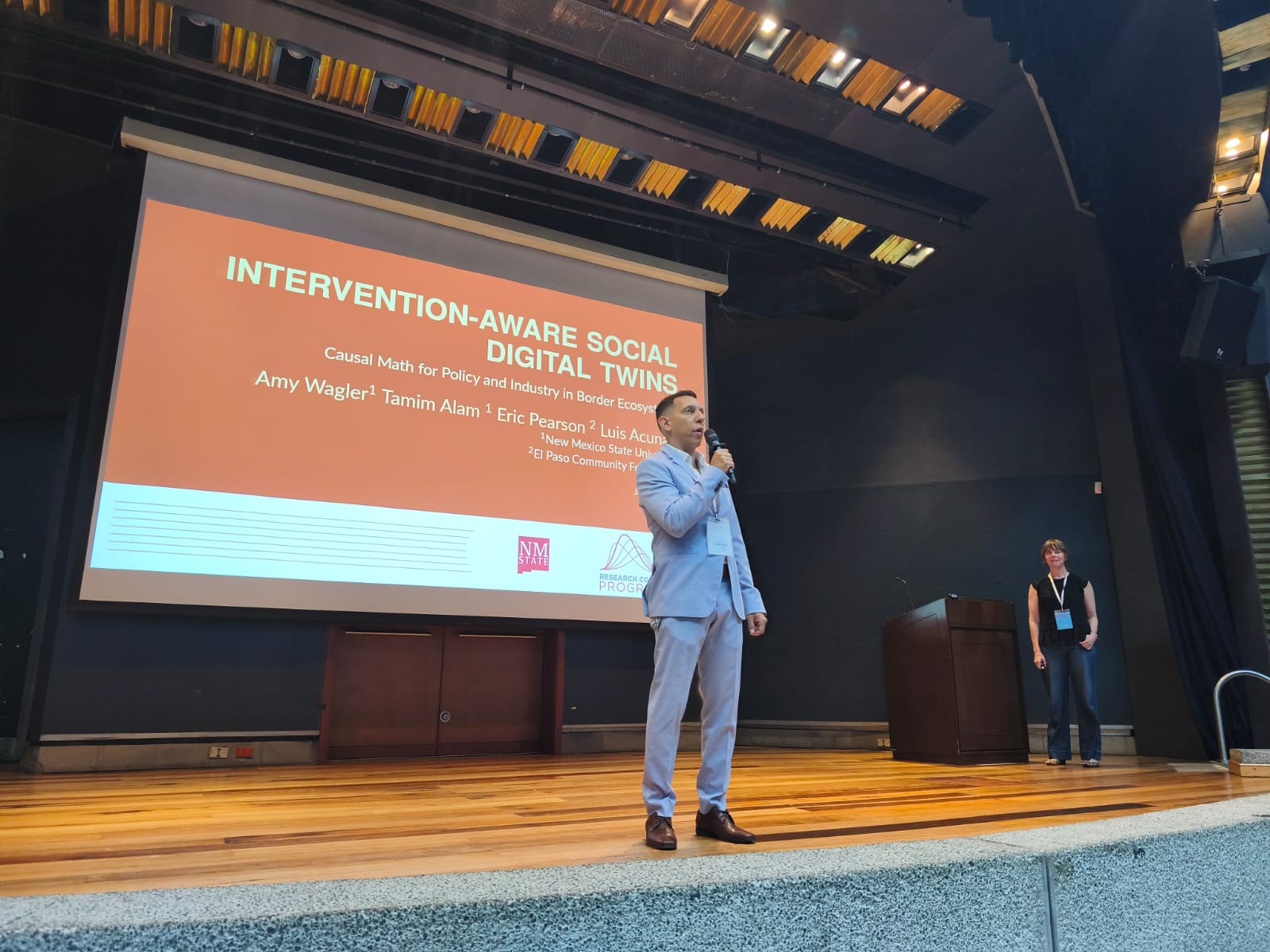
| 11:30 - 12:30 | Plenary: Amy Wagler - Intervention-Aware Social Digital Twins: Causal Math for Policy and Industry in a Border Ecosystem Chair: Anibal Sosa |
||||
| 12:30 - 2:00 | Lunch | ||||
| Room: 501 E | Room: 502 E | Room: 503 E | Room: 504 E | Room: 505 E | |
| Mathematical Modeling in Biological and Ecological SystemsChair: Diego A. Muñoz | Artificial IntelligenceChair: Oscar Alcantara | Numerical Analysis and PDEs (nonlinear PDEs and analytical methods)Chair: Juan Carlos Muñóz Duván Cardona | Optimization & ControlChair: Juan Carlos de los Reyes (Anibal Sosa) | Data ScienceChair: Reinaldo Sanchez | |
| 2:00 - 2:20 | Dynamic Modeling and Hierarchical Control of a Hybrid Irrigation System for Shallow Soils in the Semi-Humid Andean Region | Energy Stability in Deep Neural Networks via Parameter-Graph Energy | Existence and nonexistence of solution for elliptic equations with combined nonlinearities | A Bilevel Approach for Fast Radiative Transfer Models with Adaptive Group Sparsity. | An Implementation of a Subsampling Algorithm for Support Vector Regression. |
| 2:20 - 2:40 | Dynamics for the Integrated Control of Coffee Leaf Rust Hemileia vastatrix | A soft sensor based on recurrent neural networks for real-time penicillin concentration prediction | Sobolev Control of Jacobians in Variational Deformations | Computational Evaluation of Different Algorithms for Convex Clustering. | Occupational Health Demand Forecasting Based on the Prophet Model. |
| 2:40 - 3:00 | The Stochastic Gause Predator-Prey model: Noise-induced extinctions and invariance | Prediction of Patient Response to Transcranial Photobiomodulation Treatment Using Support Vector Machines | Reductions and Solutions Through Complete Classification of the Lie Symmetry Group for a Generalized Drinfeld–Sokolov–Wilson System | Optimal LQG Control for Twitter Correction Campaigns: Calibration from PHEME Data and Kalman-Bucy Estimation. | A Dual-Stage framework for fairer crime prediction. |
| 3:00 - 3:20 | Towards a digital twin of Alibertia patinoi Suspension Cell Growth in Stirred-Tank Bioreactors | Contributed Sessions | On the Integral Operator in the Periodic Ostrovsky and Kadomtsev–Petviashvili Equations | Infinite-Horizon LQR for Markov Jump Linear Systems: Optimal Management of Correction Campaigns in Social Networks. | Topological Data Analysis of the Colombian Economy: 2008 - 2025 |
| 3:30 - 4:00 | Coffee break | ||||
| 4:00 - 5:30 | Quantum Computing | Data Science Collaboration | Mathematics for Machine Learning | Introduction to Error Correcting Codes | Minicourse 5 |
| 5:30 - 6:30 | Welcome reception | ||||
| Hora | Room 501 E | Room 502 E | Room 503 E | Room 504 E | Room 505 E |
|---|---|---|---|---|---|
| 8:00 - 8:30 | Registration - Hall Auditorio Manuelita | ||||
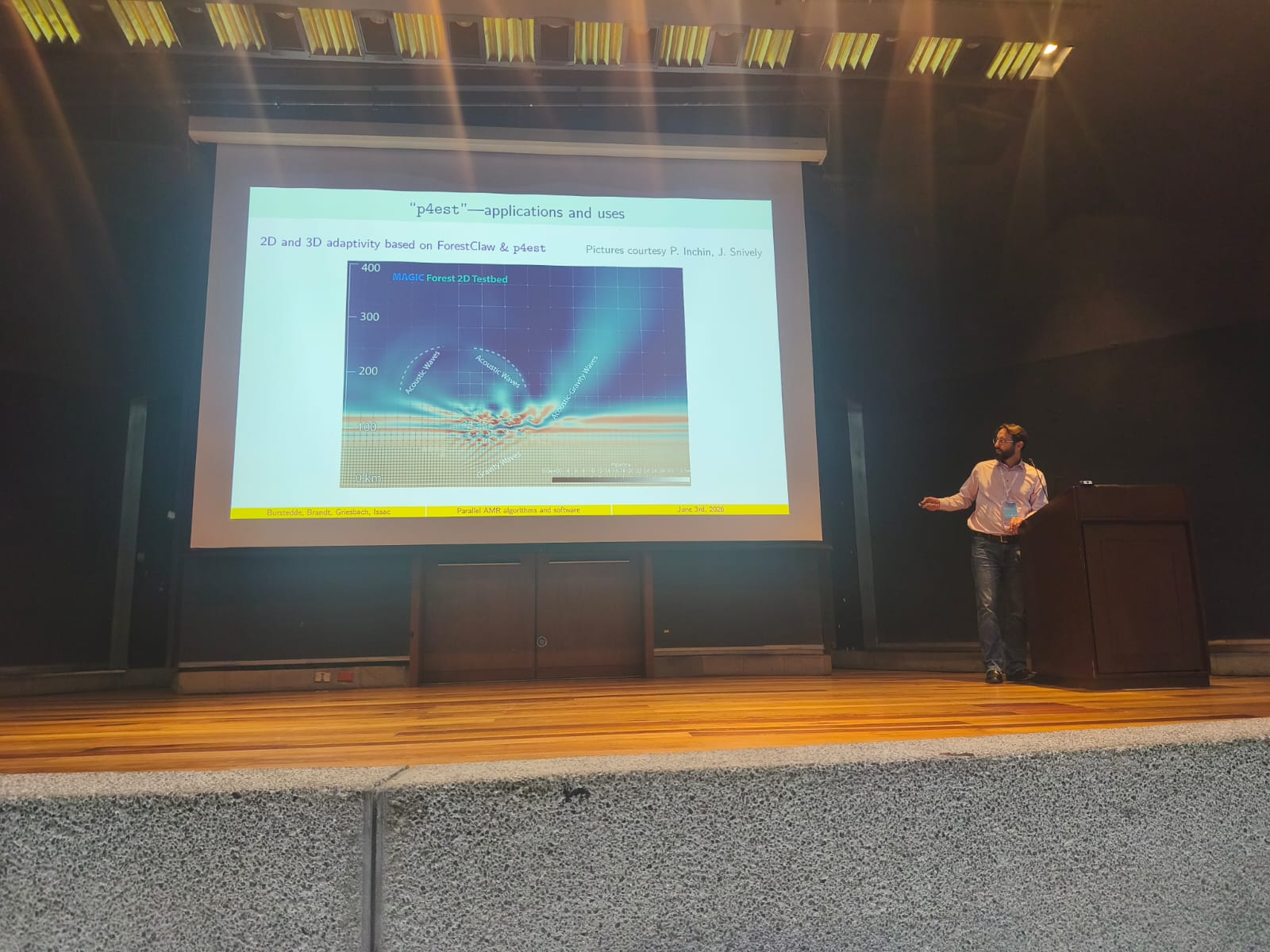
| 8:30 - 9:30 | Plenary: Carsten Burstedde - Parallel adaptive mesh generation algorithms and software Chair: Anibal Sosa |
||||
| 9:30 - 10:00 | Coffee break | ||||
| Room: 501 E | Room: 502 E | Room: 503 E | Room: 504 E | Room: 505 E | |
| Mathematical Modeling of Social, Information and Economic SystemsChair: Jorge Mario Ramirez | Coding theory and cryptographyChair: Valérie Gauthier | Numerical Analysis and PDEs (Fluid Dynamics and Wave Propagation)Chair: Mauricio Osorio | Optimization & ControlChair: Rosana Perez | Artificial IntelligenceChair: Diego Roldán | |
| 10:00 - 10:20 | Parameter estimation of a rumor propagation model with data scarcity and noise | Hybrid Wedge Attack | A two-simensional Boussinesq type model for water waves over topography | Inexact Newton-type Algorithms for Nonlinear Complementarity Problems. | About the Breast cancer detection in mammograms, image processing and its influence in a transfer learning approach |
| 10:20 - 10:40 | Competitive Dynamics of Opinions in Semi-authoritarian Societies | Data-Efficient Neural Cryptanalysis of PRESENT via Hybrid Quantum–Classical Models | Modeling water waves over irregular topography with Boussinesq systems: forward and inverse problems | Solving the quadratic matrix equation using an inexact Newton algorithm. | Medical System for Thoracic Aortic Aneurysm Risk Stratification in Colombian Patients |
| 10:40 - 11:00 | Stochastic Modeling of Diffusion Processes in Complex Networks: Influencer-Driven Content Dynamics | Improving scalability in MQ solving: A memory-access study on the XL-Wiedemann algorithm | Quadrature and Shooting Methods for Combustion Models on a Rod | A new algorithm for solving the generalized complementarity problem. | From Static Landmarks to Dynamic Sequences: A Template Matching Framework for Colombian Sign Language |
| 11:00 - 11:20 | Bulk Leakage Ratio as a Spectral Indicator of Market Stress from Random Matrix Theory | Seed Recovery from Probabilistic Leakage via Resource-Aware, Posterior-Guided Enumeration | An entropy stable and well-balanced scheme for an augmented blood flow model with variable geometrical and mechanical properties | On the construction of the generalized Jacobian for a new reformulation of the vertical complementarity problem. | Contributed Sessions |
| 11:30 - 12:30 | Auditorio Argos- Conversation: Opportunities for applied mathematics in industry. | ||||
| 12:30 - 2:00 | Lunch | ||||
| Room: 501 E | Room: 502 E | Room: 503 E | Room: 504 E | Room: 505 E | |
| Nonlinear Dynamics and Complex SystemsChair: Jorge Mario Ramirez | Mathematical and Analytical ModelingChair: Diego Alejandro Muñoz | Artificial IntelligenceChair: Jhoan Tenjo | Optimization & ControlChair: Maria De Los Angeles Gonzalez-Lima | Advanced Dynamics and Control in the Delayed World: Theory, Models, and ApplicationsChair: Andrés Rivera | |
| 2:00 - 2:20 | Chaotic dynamics of a bead on a rotating circular hoop | Existence, Uniqueness and Computation of Solutions for Singular Semilinear Fourth-Order Ordinary Differential Equations with Navier Boundary Conditions Arising in Models of Multi-Walled Carbon Nanotubes Beams | Resource-Aware Neuro-Symbolic Knowledge Graph Question Answering via Subexponential Linear Logic | Predictive Analitycs in eSports: Victory Determinants in the Firts 15 minutes of Profesional League of Legends Using Early-Game Performance indicators. | On macrophage response to early Mycobacterium tuberculosis in humans |
| 2:20 - 2:40 | Modeling of complex dynamic Systems | The Poisson-Boltzmann Equation: Existence and Uniqueness via Shooting Method | Edge-Deployable Liquid Neural Networks for Nonlinear Hydraulic System Identification | Parameter Optimization in the Fourier Heat Equation for an IoT Station. | Direct Variational Methods for Minimal Hypersurface–Type Problems: Existence, Computation, and an Application to Elasticity on Spherical Membranes |
| 2:40 - 3:00 | Lie Symmetry Classification and Dynamical Analysis of a Generalized Step-Growth Polymerization Model | Foliation of Diffusion Tensor Space for Enhanced Mean Diffusivity Analysis in Disorders of Consciousness Characterization | Complex-Valued Representation and Phase Analysis of Open Contours via P-Type Fourier Harmonics | Mean Field Games and Sustainable Portfolio Transition under Endogenous Climate Risk. | Tumor-immune competition system with time-delay and applications |
| 3:00 - 3:20 | Von Kármán Equation for Microbeams: A problem with Cantilever Boundary Conditions | Quantitative Analysis of Bio-Spectral Signals | Discriminatory vs. Uniform in Treasury Auctions: A Counterfactual Computation of the Bayesian Nash Equilibrium Using Deep Neural Networks. | A Pipeline For Optimal Motion Planning Using Multiresolution Triangulations. | On the convergence theory of Newton-type methods for NCP. |
| 3:30 - 4:00 | Coffee break | ||||
| 4:00 - 5:30 | Quantum Computing | Data Science Collaboration | Mathematics for Machine Learning | Introduction to Error Correcting Codes | Minicourse 5 |
| Hora | Room 501 E | Room 502 E | Room 503 E | Room 504 E | Room 505 E |
|---|---|---|---|---|---|
| 8:00 - 8:30 | Registration - Hall Auditorio Manuelita | ||||
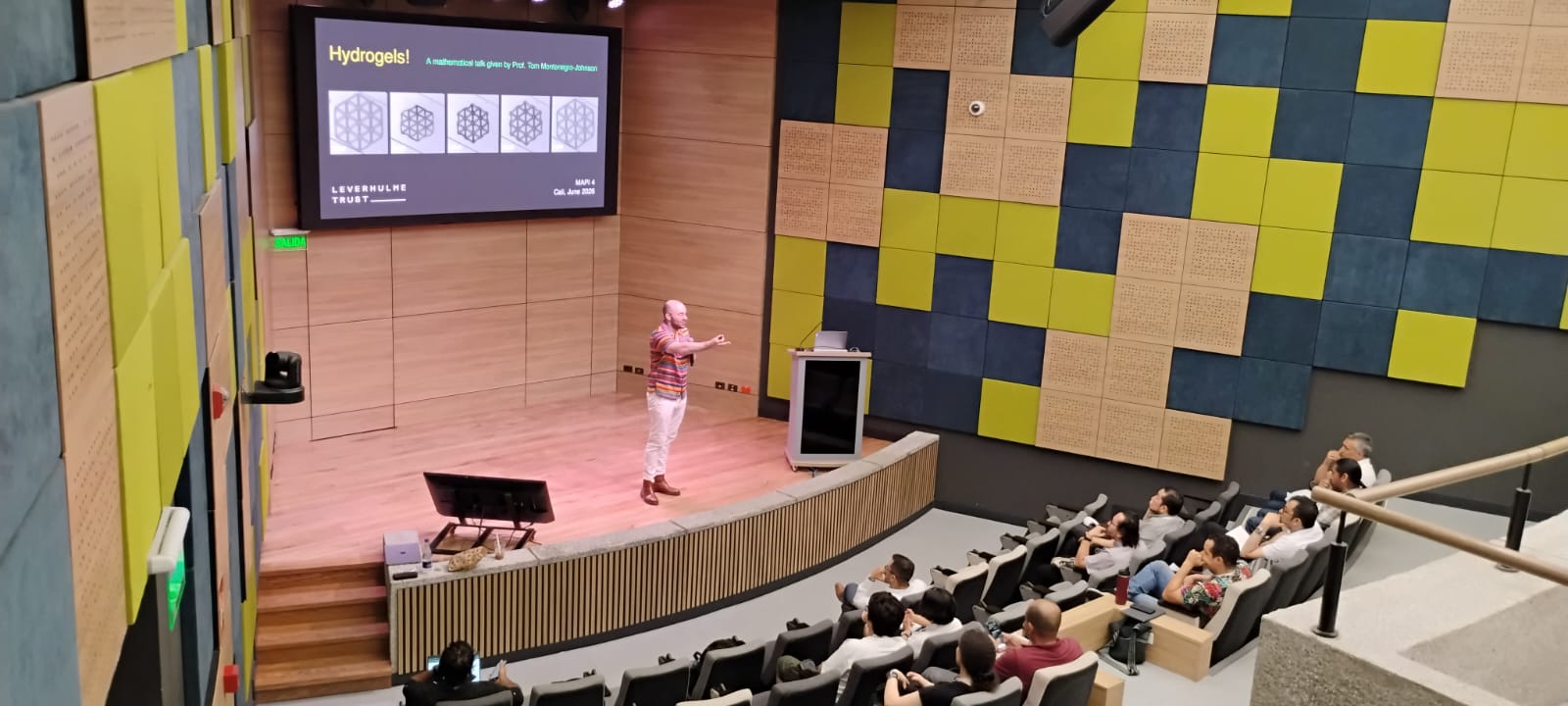
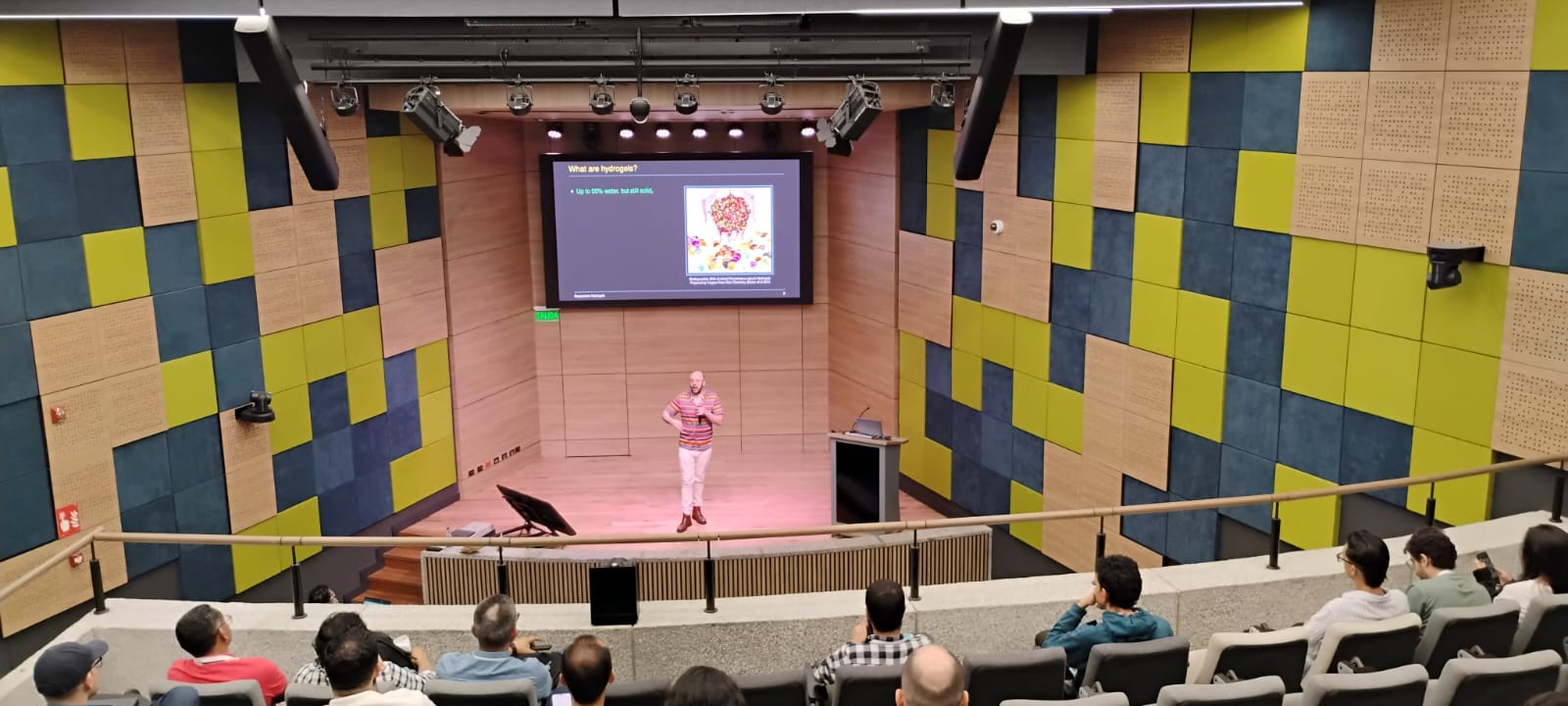
| 8:30 - 9:30 | Plenary: Thomas D. Montenegro-Johnson - Hydrogels! Auditorio Argos - Chair: Juan Galvis |
||||
| 9:30 - 10:00 | Coffee break | ||||
| Room: 501 E | Room: 502 E | Room: 503 E | Room: 504 E | Room: 505 E | |
| Coding theory and cryptographyChair: Diana Bueno | Mathematical Modeling in Physics and Engineering SystemsChair: Mauricio Osorio | Artificial IntelligenceChair: Francisco Gomez | Hyperbolic Conservation Laws: Mathematical and Numerical Perspectives with ApplicationsChair: Duvan Cardona | Advanced Dynamics and Control in the Delayed World: Theory, Models, and ApplicationsChair: Diego Roldan | |
| 10:00 - 10:20 | From Stabilizer Formalism to Numerical Thresholds: A Study of the CSS Toric Code Construction | Impact of Absolute Permeability Variations on Traveling Wave Existence in Layered Foam Flow | Tactical Vision | Local well-posedness for a nonlinear convection--diffusion equation of Nagumo type arising in chemotaxis | Delay-Induced Dynamics in a Macrophage–Mycobacterium Tuberculosis Model |
| 10:20 - 10:40 | Sh-sets on finite fields | A Critical Review of the Stroh Formalism in Fracture of Piezoelectric Materials: Foundations, Limitations, and Modern Modeling Alternatives | AI-Powered Strategies for Building Mathematical Intuition in Data Science Teaching and Learning | A Review of the Glimm Scheme for Nonlinear Hyperbolic Systems | Ordinary Differential Equations and Almost-Periodic Functions |
| 10:40 - 11:00 | Projector additive group codes | On the Passivity Properties of the Discrete-Time Port-Hamiltonian Model of DC Microgrids | EEG-Based Neurological Outcome prediction in Acute Coma and/or Comatose Survivors of Cardiac Arrest Patients using LSTM Model | Existence of weak solutions for scalar balance laws | Melnikov Analysis in Hybrid Differential Systems |
| 11:00 - 11:20 | Contributed Sessions | Analysis of an adaptive HDG method for a Maxwell problem, modeling photovoltaic cells | Genetic-Algorithm Neural Architecture Search for 1D-CNN Prediction of Mango Dry Matter from VIS/NIR Spectra | Mathematical models associated with Keyfitz–Kranzer type systems: the Riemann problem and singular waves | Existence and Computation of Periodic Solutions for the Semilinear Gompertz Equation with Discrete Delay |
| Industrial Session | |||||
| 11:30 - 12:30 | Silver Box - Linear programming model for personnel allocation in industry based on the transportation equation | Ingenio Providencia - Del campo a la predicción: Machine learning y deep Learning aplicado a la Agroindustria | Rödea - On the confidence assessment of electrophysiological measurements from multi-vendor, consumer wearable devices | Celsia - LuzIA, el centro de la estrategia de IA en Celsia | |
| 12:30 - 2:00 | Lunch | ||||
| Room: 501 E | Room: 502 E | Room: 503 E | Room: 504 E | Room: 505 E | |
| Mathematical Modeling in Energy, Environment and Industrial ProcessesChair: Diego A. Muñoz | Artificial IntelligenceChair: Manuela Bastidas | Numerical Analysis and PDEs (Discretization)Chair: Juan Carlos Galvis Duván Cardona | Harmonic Analysis and ApplicationsChair: Bienvenido Barraza | Data ScienceChair: Carlos Ramirez | |
| 2:00 - 2:20 | GIS-Based Methodologies for the Design of Urban Biomass Energy Generators | Adaptive Neuro-Symbolic Reasoning via Dynamic Routing and Structural Complexity Metrics for Mathematical Problem Solving | Hybrid High-Order Method approach for Darcy flows in porous media | The Cauchy problem for a class of diffusion equations on the torus | Ecoacoustic analysis of soundscapes from Caldas-Colombia using acoustic indices and k-means clustering. |
| 2:20 - 2:40 | NUMERICAL MODELING OF BIOMASS GASIFICATION COUPLED WITH STRUCTURAL EVOLUTION VIA POPULATION BALANCE APPROACH | Latent Roses: Capturing Topological Features with Autoencoder Activations | Numerical Performance of Implicit Schemes for Foam-Driven Traveling Waves in Layered Porous Media | Operadores pseudo-diferenciales p-ádicos y sus aplicaciones | Detection of anomalies in electricity consumption patterns using density-based clustering. |
| 2:40 - 3:00 | Mathematical Modeling and Parametric Sensitivity Analysis of a Spray Drying Tower for Instant Coffee | Digital shadows for bioprocess platforms: a description of an end-to-end architecture for reliable soft sensors | Three-Phase Flow using Semi-Discrete Lagrangian-Eulerian Schemes and Generalized Multiscale Finite Elements | Filter Functions for Reconstruction Algorithms | Multivariate Reduction Techniques Applied to Transport Urban Mobility. |
| 3:00 - 3:20 | Wildfire Propagation Modeling Using Physics-Informed Neural Networks: A Comparative Study of Strong andWeak Formulations | Comparative analysis of CNN and ViT architectures for the automatic clasification of the ontogenetic stage of Podocnemis vogli from cephalic images: CNN vs ViT for ontogenetic stage classification of Podocnemis vogli | An Adaptive Matricial Finite Difference Scheme for the Poisson Equation | Semi-discrete diffusion equation | Contributed Sessions |
| 3:30 - 4:00 | Coffee break | ||||
| 4:00 - 5:00 | Plenary: Michael Ruzhansky - Very weak solutions of PDE Auditorio Argos - Chair: Duvan Cardona |
||||
| 5:00 - 6:00 | Industry Panel - Auditorio Argos - Chair: Anibal Sosa | ||||
| 7:00 PM | Social Dinner | ||||
| Hora | Room 501 E | Room 502 E | Room 503 E | Room 504 E | Room 505 E |
|---|---|---|---|---|---|
| 8:00 - 8:30 | Registration - Hall Auditorio Manuelita | ||||
| 8:30 - 9:30 | Plenary: Daniel Escudero - Secure multiparty computation: desde matemáticas fundamentales hasta la protección de la privacidad a nivel global Auditorio Argos - Chair: Valerie Gauthier |
||||
| 9:30 - 10:00 | Coffee break | ||||
| Room: 501 E | Room: 502 E | Room: 503 E | Room: 504 E | Room: 505 E | |
| Data-Driven ModelingChair: Mauricio Osorio | Artificial IntelligenceChair: Darwin Martinez | Numerical Analysis and PDEs (Stochastic Models and Machine Learning for PDEs)Chair: Juan Galvis | Advanced Dynamics and Control in the Delayed World: Theory, Models, and ApplicationsChair: Anibal Sosa | Automated Mechanism Design and Quantum Physical Informed Neural NetworksChair: Diego A. Muñoz | |
| 10:00 - 10:20 | Automated segmentation of subcellular structures in fluorescence microscopy images using deep learning and MLOps pipelines | Comparative Evaluation of Kolmogorov-Arnold Network Variants and a Hybrid EfficientNet-B0 Model for Cervical Cytology Image Classification | Probabilistic resilience in stochastic Lotka-Volterra models with linear noise | Socio-economic conflict model under time delay effects | Effects of Health-Care Payment Contracts on Patient Outcomes: Counterfactual Neural Estimation with GANITE |
| 10:20 - 10:40 | Developable Surfaces in Maxillofacial Visualization | Structure-Preserving Leaf Venation Extraction from Cleared Leaves of Dioscorea Without Ground Truth | Physics-Informed Neural Networks for the Eikonal Equation on Manifolds | Abstract-Modeling_Glacier_Algae | Neural Network Estimation of Counterfactual Bayesian Nash Equilibria in Electricity Markets |
| 10:40 - 11:00 | A Multidimensional Representation Roughness Profile for Musical Chords | Knowledge distillation on regression tasks for healthcare time series using neural ordinary differential equations | A unified neural control framework for discrete weak formulations: Towards parametric PDEs | Delay Differential Equations: A Perspective on Equations with Memory | Comparative Analysis of Quantum and Classical Physics Informed Neural Networks for Solving the One-Dimensional Schrödinger Equation |
| 11:00 - 11:20 | Batch-mode active learning for the reduction of uncertainty | Kolmogorov-Arnold Networks as Single-Hidden-Layer Classification Heads in a Multitask Framework Based on Swin UNETR for Pulmonary Nodules | A Short-Rate Model Based on Kac-Ornstein-Uhlenbeck Processes with Additive Jumps | Criminal/non-criminal population dynamics with time delay and control | Controlled state transfer through physics-informed neural networks |
| 11:30 - 12:30 | Closing Remarks - Best paper prize - Auditorio Argos | ||||
| 12:30 - 2:00 | Lunch | ||||
Información
Hoteles recomendados
A continuación se presentan algunas opciones de alojamiento con enlaces de reserva para los asistentes a la Cuarta Conferencia Colombiana de Matemáticas Aplicadas e Industriales. Las tarifas están sujetas a disponibilidad y a las condiciones de cada hotel.
NH Royal Cali
Link de reservas disponible para estadías del 1 al 6 de junio de 2026.
Tarifa habitación individual:
COP $269.000 + IVA por noche
Desayuno incluido.
Hilton Garden Inn Cali
Opción de alojamiento con enlace de reserva para participantes de MAPI 4. Consulta la tarifa y disponibilidad directamente en la plataforma del hotel.
ReservarTRU by Hilton Cali
Opción de alojamiento con enlace de reserva para participantes de MAPI 4. Consulta la tarifa y disponibilidad directamente en la plataforma del hotel.
ReservarMS Ciudad Jardín
Opción de alojamiento cercana al sector de Ciudad Jardín. Consulta la tarifa y disponibilidad directamente en el enlace de reserva.
ReservarHotel Pance 122
Tarifa pago directo:
COP $349.000 por noche
IVA y desayuno incluidos.